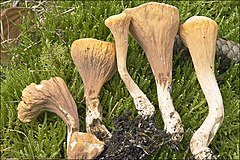
Clavariadelphus truncatus is a species of mushroom. The common name of the species is club coral. It is a member of the basidiomycete fungi family Gomphaceae.
Description
The species has a fruiting body in the shape of a club. The flesh is white, thin, and hollow at the top.[1] The vertical side of the fruiting body normally has folds and wrinkles, but can be smooth. The spores are smooth and their spore print is pale yellow to ochre.[2] The yellow chanterelle is distantly related to the mushroom and looks nearly the same, except for the ridges and cross-veined hymenium.[3] One field guide says that it is unlikely that anyone would confuse the mushroom with another species.[4]
The mushroom has a pleasant odor and a sweet taste.[1]
Habitat
The mushroom's habitat is in coniferous forests from summer to autumn.[1] The mushroom is a common species.[5] The species is found at a high elevation and is widely distributed.[6] C. truncatus can bioaccumulate significant amounts of zinc,[7] and radioactive caesium-137.[8]
Edibility
The mushroom is edible and has a sweet taste.[1] Old mushrooms may be spongy and soft inside.[9] The species is high in nutrition and can be used for cooking.[10] One field guide says that the mushroom is one of the best to eat and has a sweet flavor that is especially appealing to some people.[11] David Arora writes that the mushroom can be sauteed and served for dessert.[12]
Medicinal
The mushroom contains clavaric acid, which has been shown to reduce the rate of tumor development when given to mice.[13] Clavaric acid interferes with farnesyltransferase, an enzyme implicated in tumorigenesis, which suggests that clavaric acid may have therapeutic value in the treatment of certain cancers.[13]
| This article uses material from the Wikipedia article Metasyntactic variable, which is released under the Creative Commons Attribution-ShareAlike 3.0 Unported License. |