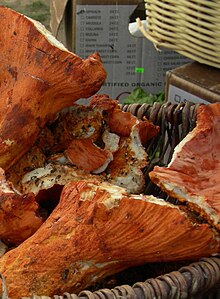
The Lobster mushroom, Hypomyces lactifluorum, contrary to its common name, is not a mushroom, but rather a parasitic ascomycete fungus that grows on certain species of mushrooms, turning them a reddish orange color that resembles the outer shell of a cooked lobster. H. lactifluorum specifically attacks members of the genera Lactarius and Lactifluus (milk-caps), and Russula (brittlegills), such as Russula brevipes and Lactifluus piperatus in North America. At maturity, H. lactifluorum thoroughly covers its host, rendering it unidentifiable. Lobster mushrooms are widely eaten and enjoyed fresh.[1] They are commercially marketed and sometimes found in grocery stores; they have been made available at markets in Oregon.[1] They have a seafood-like flavor and a firm, dense texture.
While edible, field guides note the hypothetical possibility that H. lactifluorum could parasitize a toxic host and that individuals should avoid consuming lobster mushrooms with unknown hosts, although no instances of toxicity have been recorded.[1][2][3] One author notes that he has personally never experienced any trouble from consuming them [1] and another notes that there have been no reports of poisoning in hundreds of years of consumption.[3]
| This article uses material from the Wikipedia article Metasyntactic variable, which is released under the Creative Commons Attribution-ShareAlike 3.0 Unported License. |