Buna shimeji (Hypsizygus tessellatus) is an edible mushroom[2] native to East Asia. It is cultivated locally in temperate climates in Europe, North America and Australia and sold fresh in super markets. In nature, shimeji are gilled mushrooms that grow on wood. Most often the mushroom is found on beech trees, hence the common name, beech mushroom. They are often small and thin in appearance and popular in many nations across the world.[3]

Two variations are known:
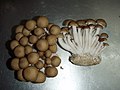
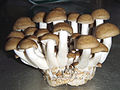
- Buna-shimeji (ja:ブナシメジ), Hypsizigus tessellatus, (Brown Beech Mushroom , Beech Mushroom, BeechBrown Clamshell Mushroom);
- Bunapi-shimeji (ja:ブナピー), (White Beech Mushroom, White Clamshell Mushroom); bunapi was selected from buna-shimeji and registered by Hokto Corporation.
Cooking
Being tough when raw,[4] the Shimeji should be cooked, having a bitter taste when raw which disappears completely upon cooking. The cooked mushroom has a firm, slightly crunchy texture and a nutty flavor. Preparation makes the mushroom easier to digest. It is often eaten with stir-fried foods including wild game and seafood. It is used in soups, stews and sauces. When prepared alone, Shimeji mushrooms can be sautéed as a whole, including the stem or stalk (only the very end cut off), using a higher temperature; or, they can be slow roasted on a low temperature with a small amount of butter or cooking oil. Shimeji is used in soups, nabe and takikomi gohan.
Gallery




| This article uses material from the Wikipedia article Metasyntactic variable, which is released under the Creative Commons Attribution-ShareAlike 3.0 Unported License. |